
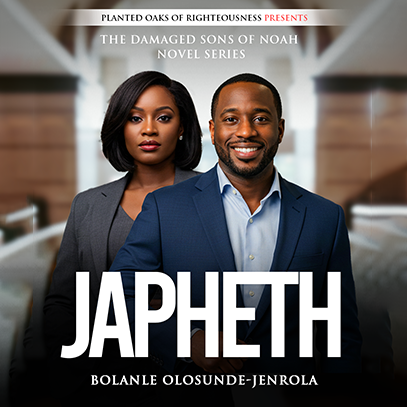
They were quiet the entire ride back, the car humming through the most serene suburb in Lusaka. Japheth parked just by the gate but didn’t immediately unlock the doors.
Kaweme turned to him.
“Thank you,” she said, voice low. “I feel… lighter.”
He looked at her for a moment, then spoke.
“Remain in the car with me. Just for a minute.”
She nodded, and he looked her in the eye.
“Before you go,” he said gently, “let’s pray.”
Her face tensed.
“I’ve been trying,” she whispered. “Talking to God. Asking Him to help me. But I think I forgot how to do it. I don’t even know if He hears me anymore. Maybe He’s just… not there. Or maybe this is punishment. For how far I’ve drifted.”
Japheth shook his head, soft but firm.
“No. God doesn’t punish us with pain.”
She looked up, eyes glassy.
“Then why does it feel like He doesn’t care, that He let this happen because He couldn’t be bothered?”
Japheth exhaled, praying under his breath for the Holy Spirit to give him utterance.
“Because we live in a broken world, Kaweme. And in this broken world, death is inevitable. Pain is part of the story. Even for the best of us. Even for believers. But that doesn’t mean God isn’t here. He doesn’t always take away the valley, but He walks us through it.”
She stayed silent.
“I lost my mother when I was barely old enough to remember her face,” Japheth continued. “I left home when I was sixteen. I’ve had to fight to survive, fight to keep my heart from going cold. But there’s one thing I’ve never let go of, Jesus. Not religion. Not performance. Just Jesus.”
He gave a sad smile.
“If I ever stop holding on to Him, I’ll have nothing left.”
Kaweme wiped her cheek.
“We go to church,” she said. “We have a family pew. But what you’re describing… I don’t think I’ve ever had that. That relationship.”
“You can.”
She looked down.
“Even after everything? How can I ever trust a God that killed my family in one day.”
“Yes,” Japheth said, his voice warm. “Even after this. Especially after this.”
He reached for her hand again.
“If you give your life to Jesus, not just in name, but truly let Him lead, He’ll give you peace. Not peace that denies the pain, but peace that holds you steady through it. Your life will begin to make sense beyond the pain. Beyond the questions, there will be meaning behind your scar.”
She was quiet for a moment.
“Should I pray with you?” he asked.
She nodded.
And he said softly, “Then repeat after me, in your own heart.”
She closed her eyes.
“Lord Jesus,” she whispered.
“Please come into my life and sort me out.”
“I cannot do life on my own.”
“I need You.”
“Help me.”
“Lead me.”
“Make me whole.”
“I surrender.”
A silence followed.
Japheth opened his eyes first. Hers were still closed. When she finally looked at him, her tears had returned, but this time, they were different.
He smiled.
“That’s it,” he said. “From today, let Him lead. Random Christianity isn’t enough. Let Him take your whole heart.”
She swallowed. “Even if He let things like this happen?”
Japheth nodded slowly.
“Yes. Even then. Because when pain happens without Jesus, it breaks you. But when pain happens with Jesus, it builds you.”
She stared at him for a long moment, then whispered, “Thank you.”
Japheth couldn’t go home.
Not after what had just happened.
He had sat across from Kaweme, holding her hand, leading her in prayer, pointing her toward God. He had told her Jesus was his anchor. His lifeline. His compass.
But if that was true, why was he still living in rebellion?
Why had he clung so tightly to unforgiveness?
As he turned away from the Muntanga residence, the road shifted beneath him, off the smooth wealth of polished tarmac into coarser streets, with potholes that mirrored his own unease. He was heading into the ghettos of Lusaka, where the air felt heavier, the night darker, and memories didn’t need permission to return.
The contrast was jarring. Out there, wealth, order, gates. Here, rust, noise, despair.
He parked in front of the same house he had left fifteen years ago.
Nothing had changed.
Same corrugated roof, dented and patched. Same cracked steps leading up to the door. Same broken swing in the yard, squeaking in the night breeze like an old ghost. Even the air smelled the same, kerosene, dust, and the faintest trace of despair.
He stepped out of the car.
A few faces around the compound turned, whispering. They recognized him. Some nodded slowly. A few blinked in disbelief.
He greeted them quietly, walked past, and stepped into the house.
It was dimly lit. The fan still clicked like it was trying to survive itself.
On the bed, his father lay curled beneath a thin wrapper. He sat up slowly as he heard footsteps.
“Shem?” the man called, his voice weak, eyes cloudy.
“No, sir,” Japheth said. “It’s Japheth.”
Silence.
Then a gasp.
“My son… Japheth? You came?”
Japheth walked closer. “Yes, sir.”
The old man stretched out a hand, trembling. “Ah. Japheth. You abandoned me.”
“I’m sorry,” Japheth replied, voice low.
“No. No, don’t apologize. I’m the one who’s sorry.” The man leaned back, chest rising and falling with effort. “I made you go, but you took over my responsibilities. You sent money. You made sure Shem and Ham went to school. If you hadn’t left, we would have drowned. It was your sacrifice that saved us.”
“I didn’t sacrifice anything,” Japheth whispered. “I chose myself.”
“You can’t carry that guilt,” his father said, reaching for him. “I’m the only one who should carry guilt here. You were a good son. A better man than I ever was.”
He wiped his eye with a crooked knuckle.
“I’m done, Japheth. I’m tired of life. I’ve seen too much, failed too often. My body is failing. My sight is going. But I’ve been holding on for one thing, your forgiveness. And Ham’s.”
There was silence.
Japheth’s throat was tight. “I forgave you a long time ago,” he said. “I just didn’t know how to say it, or face you.”
The old man smiled, the kind of smile that crumpled around the eyes.
“It’s good to hear it with my own ears.”
Then he held Japheth’s hand and began to pray.
“May you continue to be the head and not the tail,” he murmured. “You have always been a brilliant boy. I suspect you still are. No one will steal what God has placed in your hands. You will stand before kings and not be ashamed. You will lead in places others are afraid to enter. You will be a light.”
His voice broke, but he kept going. “You will be protected. Favored. Strengthened. You will never beg for bread. You will never be alone.”
Tears rolled down Japheth’s cheeks.
“I failed you,” his father said again, voice ragged now. “Your mother… she was the anchor. When she died, I died. I just kept breathing.”
He looked up, cloudy eyes filled with grief.
“I wanted to die too. If not for you boys, I would have done it. Maybe I should have. Maybe I should have ended it…”
“Daddy,” Japheth interrupted, stepping forward, his heart breaking. “No. Don’t say that.”
He dropped to his knees and wrapped his arms around the frail man.
“Why do good people die?” Noah’s voice was low, but firm. “Why did your mother have to die? It ruined us all.”
Japheth didn’t respond. He wasn’t sure if he was supposed to. His father had been weak when he entered, but now he was speaking with an intensity that startled him.
Noah noticed the confusion on his son’s face, but didn’t slow down. “After I started praying again… when loneliness gave me no choice but to turn to God… when my liver finally failed me and I couldn’t take another drop of alcohol without tasting death, I started meditating. Meditating on death and its purpose. On pain. And why God allow it.”
Japheth blinked, unsure what was more shocking, his father’s honesty or the scripture he quoted next.
“It is appointed unto men once to die, and after this, the judgment,” Noah said, voice trembling as he recited Hebrews 9:27. “Do you know what that means, Japheth?”
Japheth shook his head slowly, hoping his father wouldn’t trigger sorrow for him. He had just struggled to have the reason for death conversation with Kaweme a little while ago.
“It means that death is never random. It’s an appointment. It’s the crossing point between what we see and what we don’t. The judgment that follows earthly death determines how a person will exist for eternity. So death isn’t just an ending, it’s a transition. Sometimes…” He paused, eyes glistening. “Sometimes, God protects a person with death. To preserve them from eternal ruin. To stop them from going so far off track that they lose their soul. Isaiah 57:1 says, ‘The righteous perish, and no one takes it to heart; merciful men are taken away, none considering that the righteous is taken away from evil.’”
Japheth’s lips parted. “You think… you think Mum’s death was protection?”
Noah looked at him, a long, slow gaze that carried years of regret. “I don’t know everything. But I believe that woman loved God. She lived with fire in her bones and peace in her hands. She might’ve stayed and lost both. So yes, Japheth. I believe her death was mercy.”
He swallowed hard before continuing.
“But here’s the danger. The same way God can use death to protect; the devil, if you are disconnected from God, can use death to destroy. To take a man before he repents. To abort destiny. To ruin the generations coming after. That’s why no man should ever live outside of intimacy with the Holy Spirit. Romans 8:14 says, ‘As many as are led by the Spirit of God, they are the sons of God.’ Sonship comes with protection, it comes with patterns and instructions to obey. But if you wander, if you ignore Him, you open the door for any possibility, even becoming collateral damage.”
Silence settled in the room like smoke.
Noah took a shallow breath.
“The real question is this,” he said softly. “Who determines the length of your life? Is it God? Or is it the enemy?”
Japheth looked at his father, older, weaker, but clearly this was no longer the lost man. The words he said were profound truths, and something in Japheth’s chest began to loosen.
“Thank you for blessing me with these wise words sir,” he whispered. “I’ve carried my pain for a long time. But I’m here now. I am sorry.”
Noah opened his arms.
And Japheth stepped into them.
They held each other for a long time, father and son, broken by the past but choosing, even now, to reach for healing.
It didn’t erase the pain. But it softened it.
And for the first time in fifteen years, they were not enemies.
In that moment, Japheth understood something deep: unforgiveness holds you in the same prison as the one who hurt you. But grace, grace sets you free.
They were family, again.
It wasn’t about forgetting the past. It was about refusing to let it define them anymore.
Forgiveness didn’t mean the wound never happened. It meant it no longer had the power to control the future.

Thank God for the spirit of FORGIVENESS.am so emotional 😭 Noah is right about death been mercy and protection.
Kaiiii🔥🔥🔥🔥
Abba!Thank you!This is deep
Unforgiveness holds you in the sane prison as the one who hurt you. Profund!
Forgiveness didn’t mean the wound never happened. It meant it no longer had the power to control the future.
Thank you God for the spirit of forgiveness 🙏🙏
I really learnt a lot from this chapter, forgiveness is not just for the person that hurt you but also for yourself, letting go of the hurt and embracing healing.
This chapter really blessed me in a lot of ways, numerous revelations from one chapter. God bless you!
The teaching about death is so wholesome!
Wow!!!
Thank you, Jesus for light. These truths are soooo profound.
This made me drop a tear.
This scene is too close to home
This episode means a lot to me! I learnt a lot. Thank you, ma.
This is a whole sermon. Wow!
“Jesus, not religion, not performance, just Jesus”
These are my best words in this chapter.
Finally! I’m glad Japheth found the grace to forgive his father and go see him. I’m glad Noah has also not only become sober, but has found and embraced the eternal truth.
“Forgiveness didn’t mean the wound never happened. It meant it no longer had the power to control the future.”
This statement is so truee
I was blessed!. This has to be the highlight for me. 🥹😭❤️